DeWalt vs Milwaukee 2026: Which Tool Ecosystem Is Right for You?
DeWalt vs Milwaukee power tools compared across drills, impact drivers, saws, and more. We break down battery platforms, tool selection, pricing, and durability to help you choose the best ecosystem.
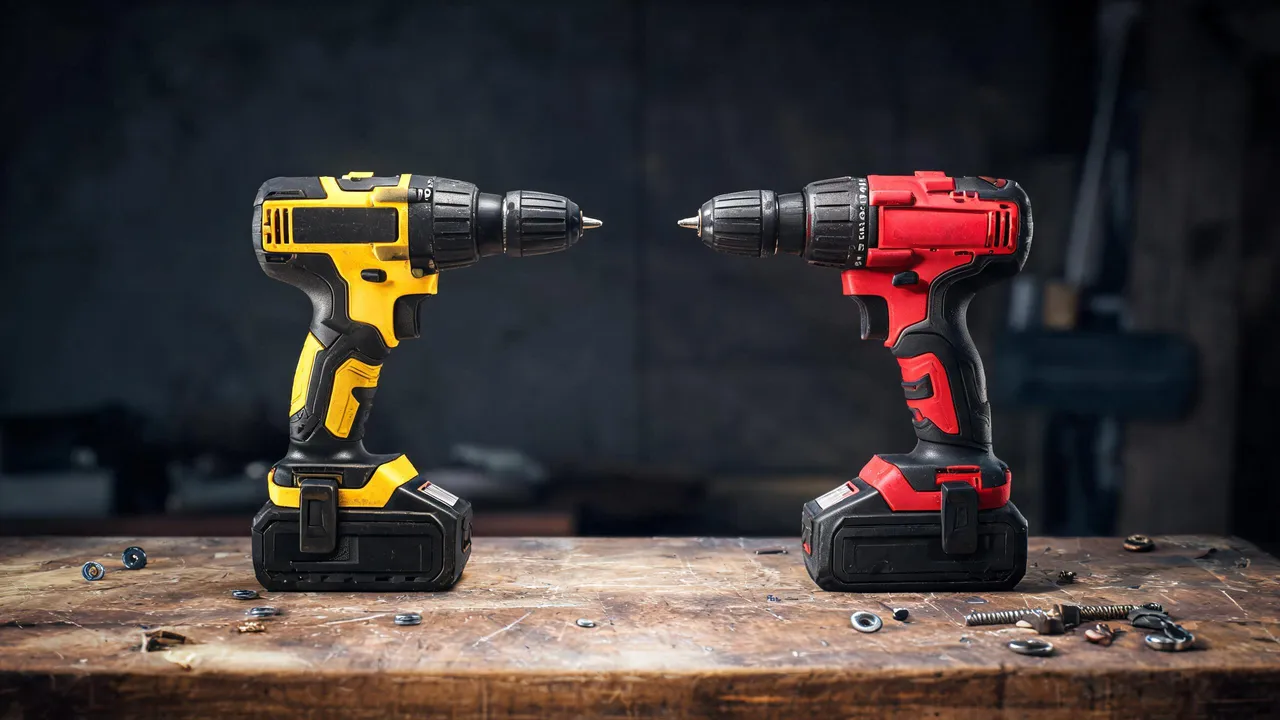
TL;DR: Quick Verdict
Both DeWalt and Milwaukee make outstanding professional-grade cordless power tools, and you genuinely cannot go wrong with either brand. Milwaukee’s M18 Fuel line offers the best power-to-weight ratio in the industry and a faster pace of innovation, making it the top choice for professional tradespeople in electrical, plumbing, and automotive work. DeWalt’s 20V MAX XR line delivers exceptional durability and the best overall value, especially with the backward-compatible FlexVolt 60V system that gives you access to high-demand tools like table saws and large rotary hammers without buying into a separate battery ecosystem.
Brand History and Philosophy
DeWalt and Milwaukee share a remarkable parallel history. Both were founded in 1924, and both built their reputations on toughness before being acquired by larger conglomerates. Understanding their corporate DNA helps explain why each brand makes the design and engineering choices it does today.
DeWalt was founded by Raymond DeWalt in Leola, Pennsylvania, with the invention of the radial arm saw. The brand built its name in woodworking and construction, a heritage that still influences its tool lineup today. In 1960, DeWalt was acquired by Black & Decker, which itself merged with Stanley Works in 2010 to form Stanley Black & Decker, a $15 billion global tool giant. This corporate backing gives DeWalt massive R&D resources and an enormous distribution network. DeWalt tools are sold at virtually every home center, hardware store, and industrial supplier in North America.
Milwaukee Electric Tool was founded by A.H. Petersen in Milwaukee, Wisconsin. The company’s early claim to fame was the “Hole-Shooter,” the first lightweight, one-handed drill capable of handling heavy-duty work. In 2005, Milwaukee was acquired by Hong Kong-based Techtronic Industries (TTI), which also owns Ryobi, Hoover, and other brands. TTI has invested aggressively in Milwaukee’s engineering teams, and the results show: Milwaukee has been the fastest-innovating power tool brand for the past decade, releasing more new tools per year than any competitor.
The key strategic difference: DeWalt is positioned as the premium brand within Stanley Black & Decker’s portfolio (above Stanley, Black & Decker, and Craftsman), while Milwaukee is TTI’s flagship professional brand and receives the lion’s share of the conglomerate’s R&D investment.
Battery Platform Comparison
The battery platform is the single most important factor when choosing a cordless tool ecosystem. Once you invest in batteries and chargers, switching brands is expensive and inconvenient. Both companies have made their battery platforms the centerpiece of their strategy.
DeWalt: 20V MAX / FlexVolt 60V
DeWalt’s 20V MAX platform is the brand’s workhorse. Despite the “20V” branding, these are 18V nominal batteries — DeWalt uses the maximum charge voltage (20V) as a marketing distinction, while the industry standard references nominal voltage (18V). This platform spans over 300 tools and uses a slide-style battery connection that has remained physically compatible since the platform launched in 2011.
The standout feature of DeWalt’s ecosystem is FlexVolt. FlexVolt batteries automatically switch between 20V and 60V output depending on whether they are connected to a 20V MAX tool or a FlexVolt 60V tool. This means a single FlexVolt battery can power your 20V drill and driver one minute, then drop into a 60V table saw or 12-inch miter saw the next. It is a genuine engineering achievement that eliminates the need to carry multiple battery voltages on the jobsite.
FlexVolt batteries come in 6Ah, 9Ah, 12Ah, and 15Ah capacities. The latest PowerStack batteries use pouch-cell technology instead of traditional cylindrical cells, delivering 50% more power in a 25% smaller package. The new PowerShift line adds 8Ah and 10Ah pouch-cell options for sustained high-current draw on demanding tools.
DeWalt chargers are fast and widely compatible. The DCB118 8-amp fast charger can bring a dead 6Ah FlexVolt battery to full charge in about 45 minutes. Importantly, all DeWalt chargers work with both 20V MAX and FlexVolt batteries.
Milwaukee: M18 / M12
Milwaukee operates two primary battery platforms: M18 (18V nominal) and M12 (12V). The M18 ecosystem includes over 250 tools, while M12 offers roughly 120 specialty tools focused on compactness for tight-access work in electrical panels, plumbing cabinets, and automotive engine bays.
The M18 Fuel designation means the tool uses a brushless motor and Milwaukee’s most advanced electronics. M18 Fuel tools consistently deliver best-in-class power output for their size, a result of Milwaukee’s proprietary POWERSTATE brushless motor technology and REDLINK PLUS electronic intelligence that prevents overload, overheating, and over-discharge.
Milwaukee’s battery lineup is deep. The High Output (HO) batteries use 21700 lithium cells rather than the standard 18650 cells found in most power tool batteries. These larger cells provide higher current delivery and better heat management. The latest M18 Forge batteries use pouch-cell technology similar to DeWalt’s PowerStack, pushing performance even further in 6Ah, 8Ah, and 12Ah capacities.
The M12 platform deserves special mention. While 12V tools from other manufacturers often feel underpowered, Milwaukee’s M12 Fuel tools rival the performance of many 18V competitors. Tools like the M12 Fuel stubby impact wrench (550 Nm of nut-busting torque) and the M12 Fuel installation driver (four interchangeable heads) have no direct equivalent in DeWalt’s lineup.
Milwaukee chargers use Redlink intelligence that communicates with the battery during charging. The M18/M12 Rapid Charger (48-59-1812) charges both M18 and M12 batteries sequentially, while the M18/M12 Super Charger (48-59-1807) can charge two M18 batteries simultaneously and brings a 6.0Ah battery to 80% in under 30 minutes.
| Feature | DeWalt 20V MAX | Milwaukee M18 |
|---|---|---|
| Nominal voltage | 18V | 18V |
| Total tools on platform | 300+ | 250+ |
| High-power solution | FlexVolt 60V (backward compatible) | MX Fuel (separate ecosystem) |
| Latest battery tech | PowerStack / PowerShift | High Output / Forge |
| Compact sub-platform | 12V MAX (limited range) | M12 (120+ tools) |
| Battery warranty | 3 years | 2 years |
Head-to-Head Tool Comparisons
Data-driven comparison is the only honest way to evaluate tool ecosystems. Below, we examine the most commonly used tools side by side.
Cordless Drills: DeWalt DCD805 vs Milwaukee 2904-20
Both are the flagship 1/2-inch hammer drill/drivers from each brand’s premium brushless lineup.
The DeWalt DCD805 delivers 2,250 in-lbs of max torque and spins at up to 2,000 RPM. It weighs 3.4 lbs bare and features an all-metal chuck, LED work light with 20-minute delay, and three-speed transmission. The ergonomic grip is one of the best in the industry — the handle angle and rubber overmold make it comfortable for all-day use. At approximately $159 (bare tool), it represents strong value.
The Milwaukee 2904-20 produces 1,400 in-lbs of max torque and reaches 2,100 RPM. At 3.3 lbs bare, it is slightly lighter than the DeWalt. The standout feature is the AutoStop kickback control, which uses an onboard accelerometer to detect binding and cuts power before the tool twists your wrist. This is a genuine safety advantage, especially when drilling large-diameter holes or using hole saws. The 2904-20 runs about $219 (bare tool).
Verdict: The DeWalt offers higher raw torque at a lower price, making it the better value. The Milwaukee’s AutoStop feature is a real differentiator for safety-conscious professionals who regularly work with large bits. For most users, the DCD805 is the smarter buy.
Impact Drivers: DeWalt DCF887 vs Milwaukee 2853-20
The DeWalt DCF887 is a proven workhorse with 1,825 in-lbs of torque, 3-speed settings, and 3,600 IPM impact rate. It uses a 1/4-inch hex chuck with one-handed bit insertion. At 2.7 lbs bare and approximately $129, it has been the best-selling impact driver in North America for good reason — it simply works, every time.
The Milwaukee 2853-20 Gen 3 Fuel impact driver produces 2,000 in-lbs of torque with up to 4,300 IPM. It is shorter than the DeWalt at 4.59 inches head length (vs. 5.3 inches), making it easier to fit into tight spaces. The four-mode drive control includes a dedicated self-tapping screw mode that runs the screw at maximum speed, then slows down and stops to prevent stripping. At $149 (bare tool), it commands a modest premium over the DeWalt.
Verdict: The Milwaukee edges ahead on compactness, feature set, and peak performance. The dedicated self-tapping mode is genuinely useful for metal framing and sheet metal work. The DeWalt remains an excellent choice, especially if you find it on sale.
Circular Saws: DeWalt DCS570 vs Milwaukee 2830-20
The DeWalt DCS570 is a 7-1/4-inch sidewinder with a brushless motor delivering 5,800 RPM. It features a magnesium shoe for durability and reduced weight, a 57-degree bevel capacity with positive stops at 22.5 and 45 degrees, and a rafter hook. At $199 (bare tool), the DCS570 cuts through 2x dimensional lumber quickly and accurately. For framing work, the DCS577 FlexVolt 60V worm-drive saw delivers torque and runtime that rival corded saws in a cordless package.
The Milwaukee 2830-20 is also a 7-1/4-inch brushless sidewinder running at 5,800 RPM. It features a magnesium guard and shoe, an LED light, a rafter hook, and a dust blower that keeps the cut line visible. The saw uses a left-side blade orientation, which right-handed users tend to prefer for better cut-line visibility. It retails for $199 (bare tool). Milwaukee also offers the 2832-20 rear-handle saw for framing crews who prefer that form factor.
Verdict: These saws are closely matched in performance and price. The real differentiator is the surrounding ecosystem: if you need a cordless table saw, miter saw, or track saw, DeWalt’s FlexVolt lineup gives you access to these high-demand tools on the same battery platform. Milwaukee’s larger saws require stepping up to the MX Fuel system with separate batteries and chargers.
Reciprocating Saws
DeWalt’s DCS382 is a compact one-handed recip saw ideal for demolition, PVC cutting, and pruning. It delivers 3,000 SPM with a 1-inch stroke length and features a 4-position blade clamp for flush cutting. At 4.5 lbs and $99 (bare tool), it is lightweight and affordable. The full-size DCS386 delivers 3,000 SPM with a 1-1/8-inch stroke and orbital action for aggressive cutting.
Milwaukee’s 2821-20 M18 Fuel Hackzall (one-handed) runs at 3,000 SPM with a 3/4-inch stroke. The 2722-20 M18 Fuel Sawzall (full-size) delivers 3,000 SPM with a 1-1/8-inch stroke and POWERSTATE brushless motor. The full-size Sawzall consistently wins head-to-head cutting speed tests against competitors. Milwaukee invented the reciprocating saw category and, unsurprisingly, makes the best ones.
Verdict: The full-size Milwaukee Sawzall is demonstrably faster in cutting tests. For one-handed recip saws, the DeWalt’s 4-position blade clamp provides better versatility. Both are solid choices.
Angle Grinders
DeWalt’s DCG418 is a 4.5-to-6-inch paddle-switch grinder running on the FlexVolt 60V platform, delivering 9,000 RPM with electronic kickback brake. The DCG413 20V version runs at 9,000 RPM with a 4.5-inch wheel. Both feature a tool-free guard adjustment and a 2-finger safety paddle switch.
Milwaukee’s 2880-20 M18 Fuel 4.5-to-6-inch grinder runs at 8,500 RPM with electronic clutch and overload protection. The paddle-switch version (2880-20) and slide-switch version (2888-20) give users a choice of control style. Milwaukee’s RAPIDSTOP brake stops the wheel in under 2 seconds.
Verdict: The DeWalt DCG418 on FlexVolt 60V delivers noticeably more power for heavy grinding and cutting — it’s the clear winner if you need sustained material removal. Both brands’ 18V grinders perform similarly for lighter tasks.
Jobsite Lighting
Milwaukee’s lighting lineup is dramatically more comprehensive, with roughly 25 lighting products ranging from personal task lights to large-area tower lights. Standouts include the M18 Rocket Dual Power Tower Light (2130-20), which delivers 4,500 lumens and can run on either an M18 battery or AC power, and the M12 Rover magnetic flood light, which sticks to any metal surface for hands-free illumination.
DeWalt’s lighting range is smaller but includes well-regarded options like the DCL074 20V tripod light (5,000 lumens) and the DCL043 spotlight. The FlexVolt DCL060 area light delivers 7,000 lumens for large jobsite illumination.
Verdict: Milwaukee dominates this category in both quantity and innovation. If lighting is important to your work, Milwaukee is the clear choice.
Tool Ecosystem and Selection
DeWalt’s 300+ tool count edges out Milwaukee’s 250+ M18 tools, but raw numbers don’t tell the whole story. The composition of each ecosystem matters more.
DeWalt excels in woodworking and construction tools. The FlexVolt 60V line includes a 12-inch dual-bevel sliding miter saw (DHS790AT2), a 10-inch table saw (DCS7485), and a track saw (DCS520) that all run on the same batteries as your drills. No other single battery platform covers this range of stationary and semi-stationary tools. DeWalt also offers outdoor power equipment including string trimmers, blowers, chainsaws, and mowers, making the 20V MAX / FlexVolt system a legitimate one-battery solution for contractors who maintain properties as well as build on them.
Milwaukee’s strength lies in specialty trade tools. Its lineup includes tools you simply won’t find from DeWalt: the M18 Fuel PEX expander for plumbing, the M18 Force Logic knockout tool for electrical conduit, the M18 Fuel 1-inch high-torque impact wrench with 1,500 ft-lbs of nut-busting torque, and cordless threaders and band saws. For automotive technicians, Milwaukee’s M12 Fuel ratchet lineup (covering 1/4-inch, 3/8-inch, and 1/2-inch drives with standard and extended-reach options) is unmatched. For electricians, the M18 cable stapler and M12 cable cutter are game-changing specialty tools.
Price and Value Analysis
Entry into either ecosystem costs roughly the same at the starter kit level. A DeWalt 20V MAX XR 2-tool kit (drill and impact driver with two compact batteries and charger) runs approximately $199-$249. A comparable Milwaukee M18 Fuel 2-tool kit costs about $229-$279.
The price gap widens at the bare-tool level. Milwaukee tools typically command a 10% to 20% premium over equivalent DeWalt models. Over a collection of 10-15 tools, this difference becomes meaningful.
Battery pricing is competitive. A DeWalt 20V MAX 5Ah battery costs about $69, while a Milwaukee M18 5.0Ah battery costs about $89. Both brands run frequent promotions, especially during Father’s Day and Black Friday, when battery-and-free-tool bundles can represent 40% or more in savings over individual pricing.
For the budget-conscious professional, DeWalt offers a wider range of brushed motor tools at lower price points within the 20V MAX line (non-XR), while Milwaukee’s brushed offerings are more limited. This means you can build a DeWalt system more affordably and upgrade to brushless XR tools over time.
Durability and Warranty
Both brands build tools that withstand professional daily use. Independent durability testing consistently shows both DeWalt and Milwaukee surviving repeated drop tests, dust exposure, and extended runtime under load.
Build quality observations: DeWalt tools tend to use thicker plastic housings and rubber overmold that covers more of the tool body. Milwaukee tools use glass-reinforced nylon and more compact designs that sometimes leave less material for impact absorption. In practice, both approaches work: you will see 10-year-old tools from both brands still in daily service on construction sites.
Warranty comparison:
| Coverage | DeWalt | Milwaukee |
|---|---|---|
| Tool warranty | 3-year limited | 5-year limited |
| Battery warranty | 3-year | 2-year |
| Free service | 1-year free service contract | Not offered |
| Commercial use | Fully covered | Fully covered |
DeWalt includes a 1-year free service contract that covers wear-and-tear items like brushes and switches — a genuine value add that Milwaukee does not match. Milwaukee’s 5-year tool warranty is two years longer than DeWalt’s, which matters if you plan to keep your tools long-term. The battery warranty favors DeWalt at 3 years vs. Milwaukee’s 2 years, a noteworthy difference given that batteries are typically the first component to fail.
Both companies honor their warranties reasonably well. Milwaukee’s warranty service turnaround is generally faster (often 5-7 business days vs. 7-14 for DeWalt in the US market), though both rely on authorized service centers whose quality can vary by location.
Which Should You Choose?
Given the significant investment involved in committing to a battery ecosystem, this decision deserves careful thought. Neither brand will let you down, but each is better suited to different users.
Choose DeWalt If…
- You work primarily in construction, framing, or finish carpentry. DeWalt’s FlexVolt 60V system gives you access to a cordless table saw, miter saw, and track saw — tools that would otherwise require separate battery systems or remain corded.
- You want the best value. DeWalt tools cost 10-20% less across the board, the 3-year battery warranty is best-in-class, and the 1-year free service contract adds real value.
- You need maximum torque from your drill. The DCD805’s 2,250 in-lbs of torque leads the category at a competitive price.
- You work across both construction and lawn care. DeWalt’s outdoor power equipment line is more comprehensive than Milwaukee’s, allowing a single battery platform for both.
- You buy tools at retailers like Lowe’s, Home Depot, or Tractor Supply. DeWalt’s distribution is broader, meaning tools and batteries are easier to source when you need replacements same-day.
Choose Milwaukee If…
- You are a specialist tradesperson (electrician, plumber, HVAC tech, automotive). Milwaukee’s specialty trade tools — knockout cutters, PEX expanders, cable staplers, compact ratchets — have no equivalents in DeWalt’s lineup.
- Weight and compactness are paramount. Milwaukee tools consistently weigh less and have smaller footprints than their DeWalt counterparts, which matters when you are working overhead or in confined access.
- You want the latest innovation. Milwaukee releases more new tools each year than any competitor. If you want the newest features first, Milwaukee is the brand for you.
- Tool tracking matters. Milwaukee’s One-Key system provides Bluetooth-based tool inventory management, geofencing, and customizable tool settings. If you manage a crew or jobsite, One-Key can pay for itself in theft prevention alone.
- You need best-in-class lighting. Milwaukee’s 25+ lighting products, many with dual power (battery and AC), represent the industry’s most advanced jobsite lighting ecosystem.
FAQ
Can I use DeWalt batteries on Milwaukee tools, or vice versa?
No. The physical battery connections, electronic communication protocols, and voltage management systems are completely different between the two brands. Using a battery adapter is technically possible with third-party adapters, but this bypasses the electronic protections built into each platform and can damage both the battery and the tool. We strongly discourage battery adapters for professional use.
Does Milwaukee make a 60V system like DeWalt FlexVolt?
Not in the same way. Milwaukee’s high-power tools use the MX Fuel system, which operates at 72V and requires completely separate batteries and chargers from the M18 platform. DeWalt’s FlexVolt is a single battery that works with standard 20V MAX tools and high-power 60V tools. This backward compatibility gives DeWalt a significant advantage in ecosystem cohesion.
Which brand has better batteries?
Both brands use lithium cells from the same major manufacturers (Samsung, LG, Murata/Sony). The latest pouch-cell batteries from both companies — DeWalt PowerStack/PowerShift and Milwaukee Forge — deliver comparable performance advantages over traditional cylindrical-cell batteries. Milwaukee’s High Output batteries using 21700 cells were an industry first, but DeWalt has since caught up with PowerShift. Practically speaking, battery performance is similar enough that it should not be a deciding factor.
Are these tools suitable for homeowner or DIY use?
Both DeWalt and Milwaukee are professional-grade tools that significantly exceed the needs of typical homeowners. For occasional DIY use, we generally recommend less expensive lines such as Ryobi, Craftsman, or Ridgid, which offer excellent value for light-to-moderate use. If you do choose DeWalt or Milwaukee for DIY, their durability means they will likely outlast you — but you are paying for capability you may never fully utilize.
Which ecosystem is easier to find on sale?
DeWalt generally has more frequent and deeper discounts, especially at Home Depot, Lowe’s, and Amazon. The Memorial Day, Father’s Day, Prime Day, and Black Friday periods are particularly good for DeWalt bundles. Milwaukee also runs seasonal promotions, but the discounts tend to be less aggressive. Both brands participate in battery starter kit promotions where purchasing a battery kit at full price qualifies you for a free bare tool.
How often do these brands release new tools?
Milwaukee releases approximately 70-100 new products per year across all platforms, the fastest pace in the industry. DeWalt launches about 40-60 new tools annually. For most users, this pace of innovation matters less than the tool selection that is available today, but if you like knowing your ecosystem is rapidly expanding, Milwaukee leads here.
Can I mix 12V and 18V tools within each brand?
Yes, but with an important distinction. Milwaukee’s M12 and M18 batteries use physically different connections and are not cross-compatible (you cannot put an M18 battery on an M12 tool). However, Milwaukee’s rapid charger can charge both M12 and M18 batteries, which simplifies your charging station. DeWalt’s 12V MAX and 20V MAX also use different form factors and are not cross-compatible. The difference is that Milwaukee has fully invested in M12 as a serious professional-grade platform with 120+ tools, while DeWalt’s 12V MAX lineup is limited to approximately 30 tools with slower model refresh cycles.