Cordless Power Tools 2026: The Complete Guide to Going Cord-Free
Everything you need to know about cordless power tools in 2026 — from drills and drivers to saws and sanders. Compare the best brands, understand battery platforms, and find the right cordless tools for your workshop.
Why Cordless Power Tools Have Taken Over
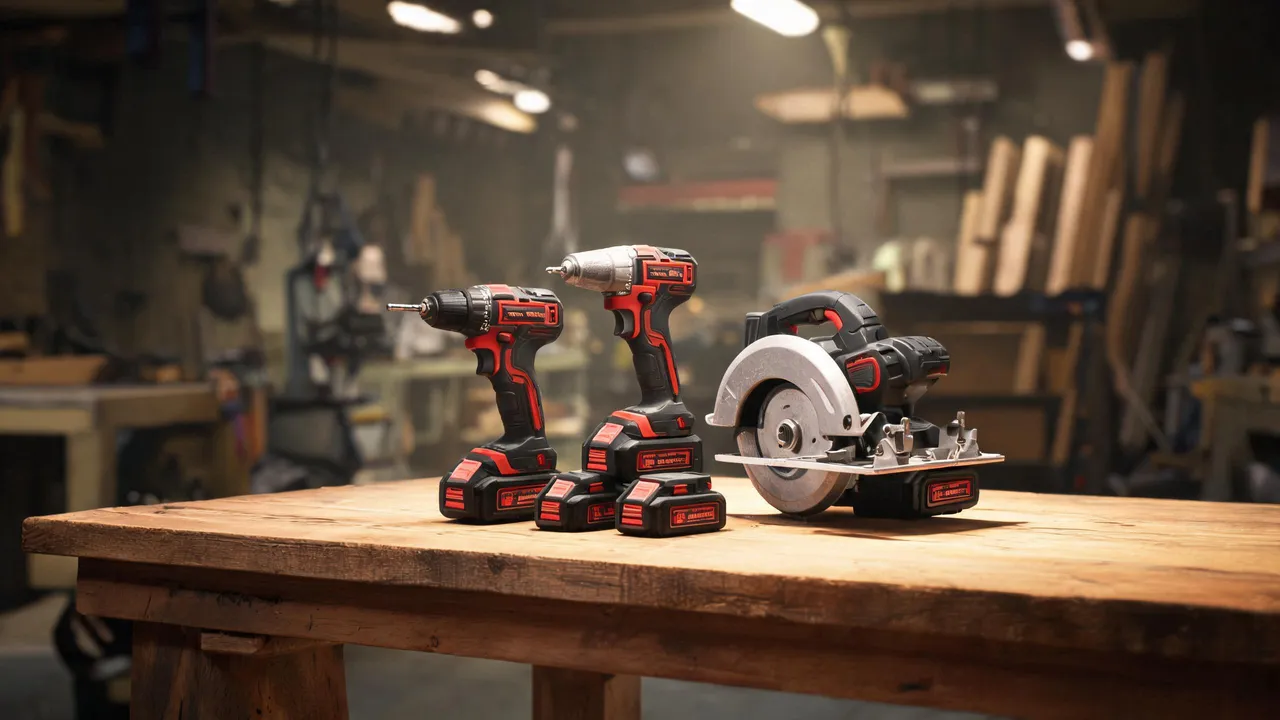
Ten years ago, cordless power tools were the compromise option — less power, shorter runtime, and more expensive than their corded counterparts. In 2026, that equation has completely flipped. Modern brushless motors, high-density lithium-ion batteries, and intelligent power management have turned cordless tools into the default choice for professionals and DIYers alike. Search interest in “cordless power tools” now exceeds 1,000 monthly queries in the US alone, and it’s one of the most accessible categories to break into with difficulty rated Easy.
The freedom of cordless is obvious — no extension cords, no hunting for outlets, no tripping hazards on a cluttered jobsite. What’s less obvious is how good the tools themselves have become. A modern 18V brushless drill produces torque numbers that would have required a corded tool a decade ago. Cordless circular saws now rip through 2x lumber faster than many corded models. And the battery platforms that power them have expanded into ecosystems of hundreds of interoperable tools.
The Cordless Tool Ecosystem: Batteries Are the Real Investment
When you buy a cordless power tool, you’re not just buying a drill or a saw — you’re buying into a battery platform. And that platform is the most important purchasing decision you’ll make. Once you own three or four batteries and a charger for a specific brand, switching becomes expensive. Before you buy your first cordless power tool, look at the full catalog from that manufacturer and ask: will I want any of these tools in the next five years?
The major platforms break down like this:
DeWalt 20V MAX / FlexVolt: The industry standard for professional contractors. Over 200 tools share the 20V MAX battery, and FlexVolt batteries automatically switch between 20V and 60V depending on the tool. If you walk onto any construction site in North America, you’ll see more yellow tools than any other color. Read our DeWalt vs Milwaukee comparison for a detailed head-to-head.
Milwaukee M18 / M18 Fuel: Milwaukee’s red tools have the most passionate following in the industry, and for good reason. The M18 Fuel line uses brushless motors with REDLINK PLUS intelligence that communicates between tool, battery, and charger to optimize performance and prevent damage. Milwaukee also offers One-Key Bluetooth tracking — invaluable on busy jobsites. The M18 platform spans over 250 tools, and Milwaukee’s innovation pace (new tools every quarter) keeps the ecosystem fresh.
Makita 18V LXT: Japanese engineering with an emphasis on refinement over brute force. Makita tools are consistently the lightest in their class, and their 25-minute rapid charging is the fastest in the industry. With over 275 LXT-compatible tools and an additional 125+ XGT (40V) tools for heavy equipment, Makita covers every conceivable job site need. Our Makita buying guide goes deeper into the brand’s lineup.
Ryobi 18V ONE+: The value champion. Ryobi has over 280 ONE+ tools covering everything from drills and saws to lawn mowers and inflators — all using the same battery. The tools aren’t built for daily professional abuse, but for homeowners and weekend DIYers, the price-to-performance ratio is unmatched. Our Ryobi buying guide covers what’s worth buying and what to skip.
Ridgid 18V: A Home Depot exclusive with a unique selling point: lifetime service agreement that covers batteries. If you register your tools within 90 days of purchase, Ridgid will replace worn-out batteries for free — for life. The tool lineup is smaller than the big three, but the core tools are solid and the battery warranty is genuinely valuable. Check our Ridgid 18V review for hands-on impressions.
Harbor Freight (Bauer / Hercules): The ultra-budget option. Harbor Freight’s house brands have improved dramatically in recent years, and for someone who needs a tool for a single project, they’re hard to beat on price. Our Harbor Freight buying guide separates the hidden gems from the tools to avoid.
Cordless Drills and Impact Drivers: Where to Start
The drill/driver is the gateway drug of cordless power tools. If you’re building your first cordless collection, start here. Our comprehensive best cordless drills guide compares the top 5 models across every price point, from the $99 Ryobi kit to the $169 Milwaukee professional beast.
But a drill isn’t the only hole-making tool you need. An impact driver uses concussive rotational blows to drive large fasteners with far more torque than a standard drill. Most professionals carry both — a drill for clean holes and precision screwdriving, and an impact driver for framing screws, lag bolts, and deck building.
The key specifications to compare across cordless drills and drivers:
- Torque (in-lbs): Higher numbers mean more fastening power. 400 in-lbs handles most DIY tasks; 1,200 in-lbs is professional grade.
- Speed (RPM): Two-speed gearboxes are standard. Low speed (0-500 RPM) for driving, high speed (0-2,000 RPM) for drilling.
- Chuck size: 1/2-inch is standard on full-size drills and accepts virtually all common bits.
- Weight: Every ounce matters after hour three. Makita leads on lightness; Milwaukee prioritizes power over weight.
Beyond Drills: Building a Complete Cordless Kit
Once you have a drill and impact driver, the natural progression is:
Cordless circular saw: A 6-1/2” or 7-1/4” blade that runs on your drill’s battery platform. Modern brushless models cut 2x lumber as fast as corded saws. Look for at least 5,000 RPM no-load speed and a blade-left or blade-right configuration that matches your dominant hand.
Cordless reciprocating saw (Sawzall): The demolition specialist. For cutting through nails, pipes, branches, and anything else in your way. One-handed “hackzall” models are lighter and more maneuverable; full-size models offer longer stroke length for faster cutting.
Cordless oscillating multi-tool: The most versatile tool you’ll ever own. It sands, cuts, scrapes, and grinds in places no other tool can reach — flush-cutting door trim, removing grout, cutting drywall openings. A must-have for any renovation project.
Cordless angle grinder: For cutting metal, grinding welds, and masonry work. Paddle-switch models offer better safety than slide-switch designs. 4-1/2” or 5” wheels are the most common sizes.
Cordless jigsaw: For curved cuts in wood, metal, and plastic. Orbital action settings let you trade between aggressive material removal and clean finish cuts.
Brushless vs Brushed: Why It Matters
Every cordless power tool you buy in 2026 should have a brushless motor. The technology has matured to the point where even budget brands like Ryobi include brushless motors in their HP line. The difference is fundamental: brushed motors use physical carbon blocks that press against a spinning commutator, creating friction that wastes 30-50% of the battery’s energy as heat. Brushless motors use electronic controllers to manage the magnetic field, eliminating that friction entirely.
The practical benefits: 30-50% longer runtime from the same battery, more torque from a smaller motor, and a tool that will likely last longer than you’ll own it. At current prices, the premium for brushless over brushed is usually $20-50 — an amount you’ll recoup in saved batteries within the first year.
Battery Technology: Amp-Hours, Stacked Cells, and What to Buy
Cordless tool batteries are rated in amp-hours (Ah), and higher numbers mean longer runtime. But not all amp-hours are equal:
2.0 Ah compact batteries: Lightweight and ideal for overhead work or tools you use intermittently. Fine for DIY use where you’re not running the tool continuously.
4.0-5.0 Ah standard batteries: The sweet spot for most users. Enough runtime for a full day of mixed use on a drill or impact driver. Heavier but worth the weight for tools that draw more current (circular saws, grinders).
6.0-12.0 Ah high-capacity batteries: For high-draw tools and all-day professional use. These are heavy and expensive, but a single 12.0 Ah FlexVolt battery can run a 60V miter saw through hundreds of cuts.
Stacked lithium (pouch cells): DeWalt PowerStack and Milwaukee Forge batteries use flat pouch cells instead of cylindrical 18650 or 21700 cells. The advantage is better heat dissipation, higher peak current delivery, and a more compact form factor. They’re more expensive but deliver noticeably better performance under sustained load.
Pro tip: Buy kits that include batteries rather than bare tools. The bundled battery price is almost always cheaper than buying separately, and having 3-4 batteries means you’ll never wait for a charge.
How to Build Your First Cordless Kit
If you’re starting from zero, here’s the most cost-effective path:
- Choose your battery platform first — not a specific tool. Look at the full catalog and make sure it covers tools you’ll want in the next 3-5 years.
- Buy a drill/driver combo kit — almost every brand offers a kit with drill, impact driver, two batteries, charger, and bag for $150-250. This is almost always the best value entry point.
- Add batteries before adding tools — a third battery means you’re always charged. Two batteries means you’re sometimes waiting.
- Buy bare tools for subsequent purchases — once you have batteries and a charger, you only need the tool itself, saving $50-100 per purchase.
The Future of Cordless: What’s Coming
The cordless revolution isn’t slowing down. Several trends are reshaping the landscape:
Multi-voltage platforms: DeWalt FlexVolt and Makita XGT let a single battery power both 18V compact tools and 40V/60V heavy equipment. The vision is one battery platform for everything from a screwdriver to a table saw.
Smart tools with Bluetooth: Milwaukee One-Key, DeWalt Tool Connect, and Makita AWS use Bluetooth to track tools, customize performance profiles, and automatically activate dust extractors when a sander starts. For professionals managing a fleet of tools across multiple sites, this is becoming essential.
Specialty tools going cordless: Tools that were corded-only five years ago — miter saws, table saws, rotary hammers, concrete vibrators — are now available in cordless versions that match corded performance. The last corded holdouts are falling one by one.
Direct-to-consumer brands: Chinese manufacturers like Mellif, Kimo, and Seesii are selling brushless cordless tools at half the price of name brands, primarily through Amazon. Quality varies wildly, but the best of these budget tools are genuinely competitive for light to medium use.
FAQ
Can I mix batteries between brands?
Not natively — each brand uses a proprietary battery interface. Third-party adapters ($15-30 on Amazon) exist, but they typically disable the tool’s low-voltage cutoff, so you’ll need to monitor battery levels manually to avoid damaging cells.
How long do cordless tool batteries last?
Lithium-ion tool batteries last 2-4 years or 500-1,000 full charge cycles before capacity noticeably degrades. Heat is the main enemy — store batteries indoors at room temperature, not in a hot garage or freezing shed. For maximum lifespan, store at 40-60% charge.
Are cordless tools powerful enough for professional use?
Yes — and they have been for years. The Milwaukee M18 Fuel and DeWalt FlexVolt lines produce more torque than many corded tools. The only tools where corded still holds a meaningful advantage are stationary shop tools (table saws, planers) that run continuously for hours and don’t need portability.
What’s the best cordless power tool brand?
There’s no single best brand — it depends on what you value. DeWalt for the best all-around balance. Milwaukee for maximum power and innovation. Makita for lightweight ergonomics and refinement. Ryobi for unbeatable value. The best brand is the one with the ecosystem that matches your needs and budget.
Conclusion
Cordless power tools have won. The performance gap with corded has evaporated, the battery platforms are mature and stable, and the tool selection now covers everything a professional or DIYer could need. The only real decision is which color battery you’ll invest in.
If you’re just starting out, pick a platform that covers the tools you’ll want in the next five years, buy a drill/driver combo kit, and add tools as projects demand them. Check our individual brand guides and tool comparisons (linked throughout this page) for detailed recommendations on specific models. And if you’re still not sure, the DeWalt vs Milwaukee comparison covers the two biggest players head-to-head.