Makita Tools Buying Guide 2026: LXT vs XGT, Best Picks, and Ecosystem Strategy
Comprehensive Makita tools buying guide for 2026. Compare LXT vs XGT platforms, discover the best Makita tools by category, understand battery strategy, and learn why Makita's 275+ tool ecosystem is a top choice for professionals and serious DIYers.
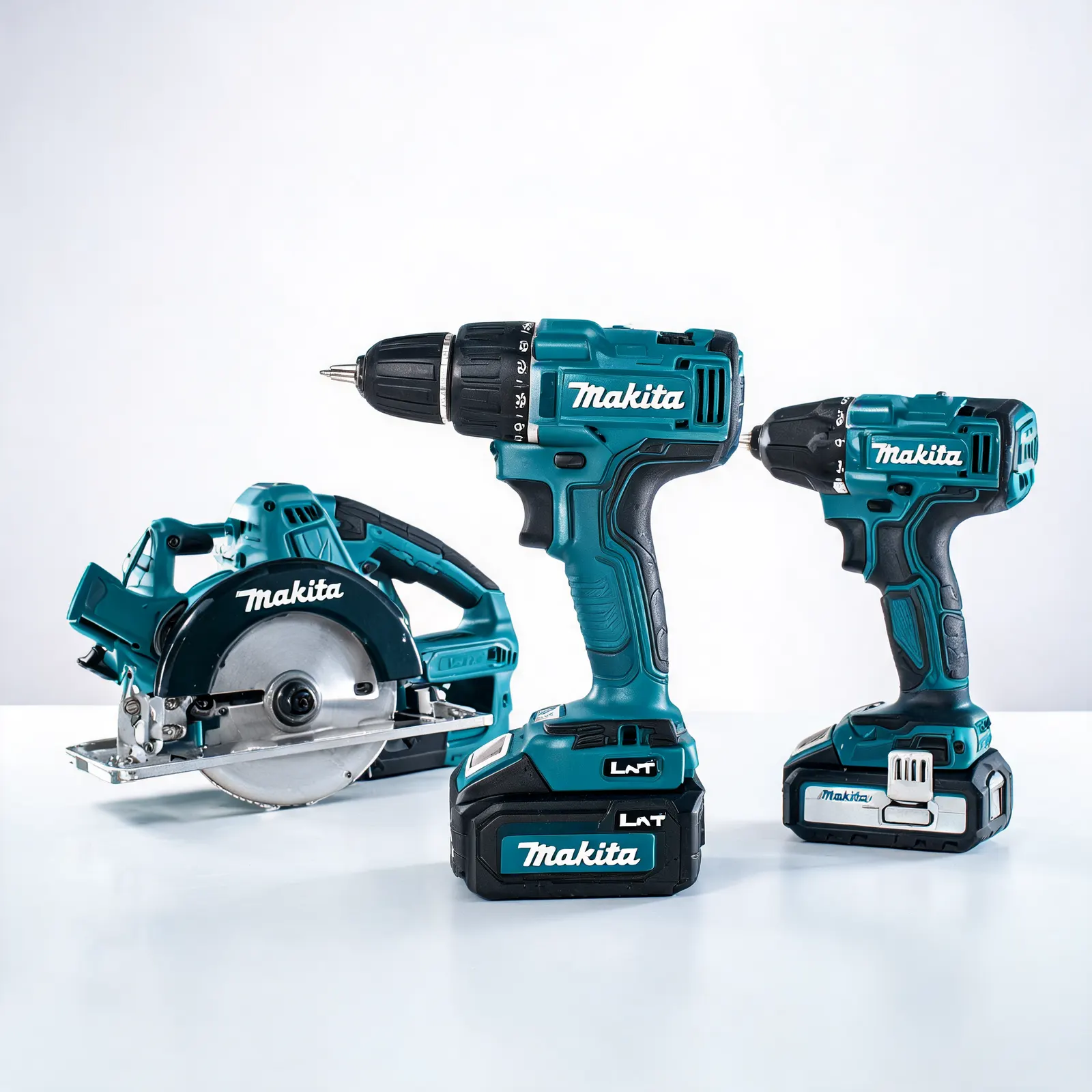
TL;DR: Is Makita Right for You?
Makita is the engineer’s power tool brand. Japanese precision, obsessive refinement, and a relentless commitment to lightweight design define every tool they make. With the world’s largest 18V ecosystem at 275+ tools — and the new 40V/80V XGT platform for heavy equipment — Makita offers a uniquely coherent strategy: choose LXT for general construction, add XGT when you need serious power.
| If You’re… | Makita Recommendation |
|---|---|
| A professional contractor | LXT for your daily carry (drill, impact driver, multi-tool). XGT for high-demand tools (rotary hammer, miter saw, table saw). |
| A serious DIYer ready to invest | All-LXT is hard to beat. Start with a drill + impact driver combo kit, add tools as projects grow. |
| A woodworker or cabinet maker | Makita’s precision and lightweight design make it the top choice for finish work. The compact router and track saw are class-leading. |
| A value-conscious buyer | Makita costs more than Ryobi but delivers professional-grade quality. Buy once, cry once. |
LXT vs XGT: Understanding Makita’s Two-Platform Strategy
Makita is unique in offering two distinct cordless platforms rather than trying to serve all users with one system:
LXT (18V): The Workhorse Platform
Launched in 2005, LXT is the world’s most mature and extensive 18V ecosystem. With 275+ tools, it covers every trade from framing to finish carpentry, plumbing to automotive. Key characteristics:
- 18V nominal (same as DeWalt “20V MAX” — it’s the same 5-cell lithium pack)
- Slide-style battery with excellent ergonomics
- Star Protection computer communication between tool and battery to prevent overload, over-discharge, and overheating
- Rapid Optimum Charger charges a 5Ah battery in 45 minutes (fastest in the industry for its class)
XGT (40V/80V): The Heavy-Duty Platform
Launched in 2020, XGT is Makita’s answer to the growing power demands of cordless job sites. It’s not a replacement for LXT — it’s a complement.
- 40V max (36V nominal) for handheld tools; two batteries in series create 80V max for stationary equipment
- Designed for tools that previously required cords: 10” miter saws, SDS-Max rotary hammers, 14” cut-off saws, demolition hammers
- Digital communication between tool, battery, and charger for intelligent power management
- Auto-Start Wireless System (AWS) — XGT tools can automatically trigger connected dust extractors via Bluetooth
Which Platform Should You Choose?
For 95% of users, the answer is simple: start with LXT. The XGT platform is explicitly designed for heavy equipment that most contractors rent or run corded. Unless you’re framing houses all day with a cordless miter saw or breaking concrete with a cordless rotary hammer, you don’t need XGT. LXT covers everything from light drilling to 7-1/4” circular saws.
The genius of Makita’s strategy: LXT tools will never be replaced by XGT. The two platforms serve different power bands. Your LXT investment is safe.
Best Makita Tools by Category
Drilling and Fastening
Best Drill: Makita XFD15ZB 18V LXT Sub-Compact ($109 bare) At 3.1 pounds, this is the lightest 18V drill on the market — and you feel the difference after hour three of overhead work. 350 in-lbs of torque may look modest on paper, but in practice it handles every bit and fastener up to 1” spade bits in framing lumber. The 25-minute rapid charge on Makita’s charger means you’ll never wait for a battery. For general contractors and serious DIYers, this drill is the sweet spot of weight, power, and price.
Best Impact Driver: Makita XDT20ZB 18V LXT ($119 bare) The XDT20ZB is a masterclass in refinement. Its 4-speed power selector gives you from delicate (0-1,100 RPM, 500 in-lbs for small screws) to full power (0-3,600 RPM, 1,800 in-lbs for lag bolts). The Quick-Shift mode automatically downshifts after the screw seats to prevent over-driving. T-mode is purpose-built for self-tapping screws — it starts slow to cut threads, then ramps to full speed. At just 4.6” head length, it fits anywhere.
Best Impact Wrench: Makita XWT15ZB 18V LXT ($139 bare) 240 ft-lbs of fastening torque in a compact 5-3/4” body. Perfect for automotive lug nuts and machinery assembly. The 3-speed switch lets you dial down for smaller fasteners.
Cutting
Best Circular Saw: Makita XSH06ZB 18V LXT 7-1/4” ($169 bare) Makita’s flagship cordless circ saw. 6,000 RPM — faster than many corded saws — rips through 2x material effortlessly. The magnesium base plate shaves weight without sacrificing rigidity. Dual LED lights eliminate blade shadows. Automatic Speed Change adjusts torque and RPM under load for consistent cutting speed. If you frame houses or build decks, this is the saw.
Best Miter Saw: Makita XSL06PT 36V LXT 10” Dual-Bevel ($499 kit) Uses two 18V LXT batteries in series for 36V power. 4-steel-rail sliding system gives rigid support and 12” crosscut capacity at 90°. Direct-drive motor eliminates belts for smoother cuts. AWS-compatible for automatic dust extraction. For trim carpenters who need cordless without compromise.
Best Track Saw: Makita XPS01PTJ 36V LXT 6-1/2” ($499 kit) Makita practically invented the cordless track saw category. 6,000 RPM, 2-3/16” cut depth at 90°, and Makita’s legendary guide rail precision. Splinter guards on both sides of the blade for chip-free cuts in plywood and melamine. If you break down sheet goods regularly, this tool will change your workflow.
Best Jigsaw: Makita XVJ05ZB 18V LXT D-Handle ($119 bare) 3 orbital settings plus straight cutting. Tool-less blade change and bevel adjustment. Variable speed dial integrated into the trigger — brilliant ergonomics. The die-cast aluminum base is flat and stable. For coping, scroll work, and cutouts, it’s the best cordless jigsaw available.
Grinding and Sanding
Best Angle Grinder: Makita XAG12ZB 18V LXT 4-1/2” ($119 bare) 8,500 RPM with Automatic Speed Change technology. Electric brake stops the wheel in 2 seconds. Labyrinth construction seals the motor from dust and debris. Accepts 4-1/2” and 5” wheels. For metal fabrication, tile cutting, and surface prep.
Best Random Orbit Sander: Makita XOB01ZB 18V LXT 5” ($89 bare) Three-speed settings (7,000/9,500/11,000 OPM). Efficient dust collection through the pad into the included bag or vacuum attachment. At 3.7 lbs, it’s light enough for vertical and overhead sanding. The rubberized grip reduces vibration fatigue.
Outdoor Power Equipment
Makita extends LXT into lawn and garden — same batteries power your tools and your yard equipment.
Best Lawn Mower: Makita XML08PT1 36V LXT 21” ($499 kit with 4 batteries) Uses two 18V LXT batteries — no new platform required. Quiet operation at 87 dB (compared to 96+ dB for gas). Steel deck for durability. Folds vertically for compact storage. The kit includes four 5Ah batteries, giving you a massive battery collection for all your tools. Ideal for lots up to 1/3 acre.
Best String Trimmer: Makita XRU15PT1 36V LXT ($329 kit) Dual 18V configuration. 15” cutting swath with 0.080” line. Three-speed control with automatic torque drive. Loads line with a simple bump feed. Quiet enough for early-morning trimming without waking neighbors.
Best Blower: Makita XBU03PT1 36V LXT ($379 kit) 459 CFM and 116 MPH. Variable speed trigger with cruise control. At 60 dB on low speed, it’s genuinely pleasant to use. Runtime is 45 minutes on low, 18 minutes on high with dual 5Ah batteries.
Specialty Makita Tools Worth Noting
- Makita XTR01Z 18V LXT Compact Router ($99 bare) — Variable speed (10,000-30,000 RPM), accepts industry-standard template guides. The go-to trim router for edge profiling and hinge mortising.
- Makita XSC02ZB 18V LXT Metal Cutting Saw ($269 bare) — 5-3/8” blade, cuts steel studs, Unistrut, and all-thread cleanly without sparks. Essential for electricians and HVAC installers.
- Makita XRJ05ZB 18V LXT Reciprocating Saw ($119 bare) — 1-1/4” stroke length, orbital action, tool-less blade change. Cuts through 4” cast iron pipe and 6” hardwood branches.
Battery Guide: LXT Battery Strategy
Makita’s LXT batteries use a simple amp-hour progression:
| Battery | Capacity | Charge Time | Best Use | Typical Price |
|---|---|---|---|---|
| 2Ah Compact | Smallest | 15 min | Ultra-light drill use, precision tasks | $40-50 |
| 3Ah | Compact mid | 22 min | General DIY, good weight-to-runtime ratio | $55-65 |
| 4Ah | Standard | 36 min | All-around professional use | $70-80 |
| 5Ah | Extended | 45 min | High-draw tools, saws, outdoor equipment | $85-100 |
| 6Ah | Maximum 18V | 55 min | All-day runtime, heaviest use | $110-130 |
Our recommendation: The 5Ah battery is the sweet spot for LXT. It provides excellent runtime in high-draw tools while keeping weight manageable on drills and impact drivers. Own at least three 5Ah batteries and one 2Ah for when you want the lightest possible drill. Makita combo kits often include two 5Ah batteries — that’s the best way to build your collection.
Star Protection: Every Makita LXT tool and battery communicates through Star Protection technology. The tool monitors battery temperature, voltage, and current draw in real time. If it detects an overload, it cuts power before damage occurs. This is one reason Makita batteries consistently outlast competitors in longevity tests.
Makita vs the Competition
Makita vs DeWalt
Makita and DeWalt are the two most popular professional cordless tool brands globally, and the choice often comes down to ergonomics. Makita tools are lighter, more compact, and more refined in operation. DeWalt tools feel more robust and deliver slightly more brute power. Makita wins on precision and all-day comfort. DeWalt wins on raw torque numbers and jobsite durability. Both have excellent ecosystems.
Makita vs Milwaukee
Milwaukee’s M18 Fuel line outguns Makita LXT on peak power — sometimes significantly. But Milwaukee tools are consistently heavier, and their batteries are larger and more expensive. Makita’s weight advantage is real: a Makita drill + impact driver setup weighs over a pound less than the Milwaukee equivalent. For electricians and finish carpenters working overhead all day, that matters. For framers and plumbers who need maximum torque, Milwaukee wins.
Makita vs Ryobi
These aren’t direct competitors — they serve different markets. Makita is professional-grade Japanese engineering. Ryobi is budget-friendly DIY value. A Makita drill costs 2x more but will last 3x longer and feel better every time you pull the trigger. If you can afford Makita and value tool quality, buy Makita. If budget is your primary concern, Ryobi is the smarter choice.
Makita vs Hilti
Hilti is Makita’s only true peer in build quality and precision. Hilti tools are outstanding but their ecosystem is smaller, their batteries are proprietary and expensive, and their distribution is limited to Hilti stores and direct sales. Makita offers 90% of Hilti’s quality with a far broader ecosystem and wider availability. Unless you’re a Hilti fleet customer, Makita is the more practical choice.
FAQ
Can I use Makita LXT batteries on XGT tools?
No. LXT and XGT are physically incompatible platforms with different battery interfaces. This is intentional — XGT operates at higher voltage and requires different electrical architecture. The two platforms complement each other rather than replace.
Is Makita’s 18V really competitive with “20V MAX” brands?
Yes — “20V MAX” is a marketing label for 18V nominal systems. A Makita 18V LXT tool and a DeWalt 20V MAX tool use identical battery cell configurations. Peak power differences come from motor design and electronics, not the voltage label.
Does Makita make their own motors?
Yes. Makita is one of the few tool manufacturers that designs and builds its own motors in-house. This vertical integration gives them exceptional control over performance characteristics — torque curves, efficiency, heat management. It’s a key reason Makita tools feel different from competitors.
Is Makita moving everything to XGT?
No. Makita has explicitly stated that LXT and XGT will coexist indefinitely. XGT addresses power bands that LXT can’t reach (rotary hammers, large miter saws, table saws). Core tools — drills, impact drivers, recip saws — will remain on LXT. Your LXT investment is not being deprecated.
Are Makita tools made in Japan?
Many Makita tools are manufactured in Japan, but the company also has factories in China, Brazil, Romania, Germany, the UK, and the US. Japanese-manufactured tools are generally considered the highest quality, but Makita maintains consistent quality standards globally. Check the tool label for country of origin if it matters to you.
What does “Star Protection” do?
Star Protection is Makita’s proprietary communication protocol between tool and battery. The tool monitors real-time battery temperature, voltage, and current. If it detects conditions that would damage the battery or tool — over-discharge, overheating, overload — it cuts power immediately. This extends battery life significantly compared to brands without active battery management.
Conclusion: Who Should Buy Makita?
Makita occupies a unique position in the power tool world. It’s the brand for people who appreciate precision engineering, who notice the difference between a good trigger and a great one, and who are willing to pay for tools that feel lighter, run smoother, and last longer.
Buy Makita if:
- You value lightweight, compact tool design
- You do finish work that rewards precision (cabinetry, trim, furniture)
- You work overhead or in tight spaces where every ounce counts
- You want the largest 18V ecosystem with no risk of platform abandonment
- You appreciate the engineering behind a well-designed tool
Skip Makita if:
- Raw power is your #1 priority (go Milwaukee M18 Fuel)
- You’re on a tight DIY budget (go Ryobi)
- You want the absolute widest selection of specialty trade tools (go Milwaukee)
- You’re deeply invested in another battery platform already
The smartest play for most professionals and serious DIYers: build your core kit on Makita LXT. Add the occasional specialty tool from other brands if Makita doesn’t make it. The LXT platform’s combination of breadth, maturity, and refinement is unmatched — and with 275+ tools, chances are Makita already makes exactly what you need.