Ryobi Tools Buying Guide 2026: Best ONE+ Picks, Ecosystem Guide, and Deals
Everything you need to know about buying Ryobi tools in 2026. We cover the ONE+ ecosystem, best Ryobi tools by category, battery guide, and where to find the best Ryobi deals. Perfect for DIYers building their first power tool collection.
TL;DR: Is Ryobi Right for You?
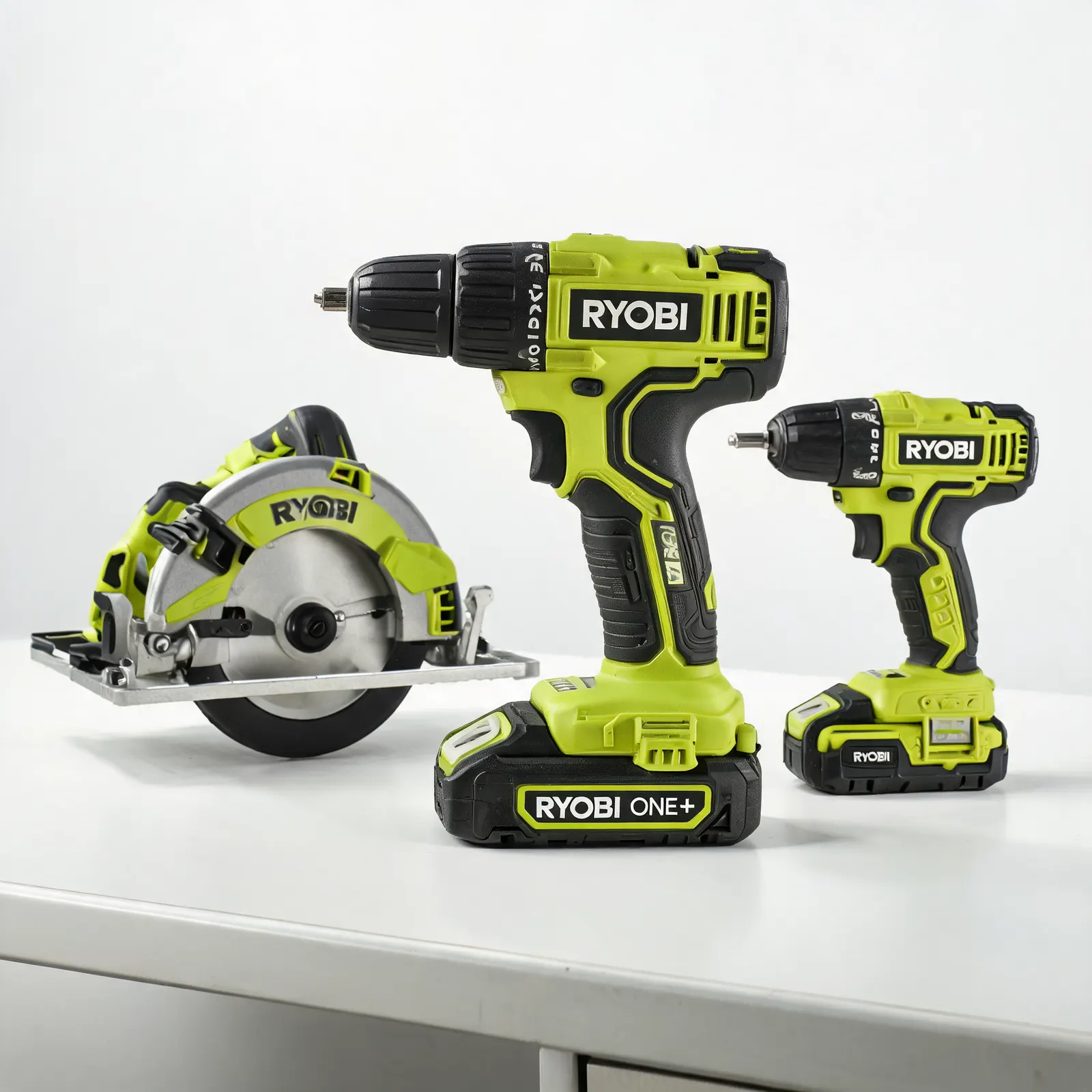
Ryobi is the undisputed champion of DIY power tools. With over 280 tools sharing the same 18V ONE+ battery — and a commitment to backward compatibility dating back to 1996 — no other brand offers the same breadth at Ryobi’s price point. If you’re a homeowner, apartment dweller, or weekend warrior building your first tool collection, Ryobi is almost certainly the smartest money you can spend.
| If You’re… | Ryobi Recommendation |
|---|---|
| A first-time homeowner | Start with a combo kit (drill + impact driver). The PBLDD01K at $99 is unbeatable value. |
| A DIY enthusiast | Build your ONE+ collection systematically. Add a circular saw, reciprocating saw, and multi-tool. |
| A budget-conscious buyer | Ryobi is the best value in power tools. Period. Shop Ryobi Days deals (typically June-July) for the deepest discounts. |
| A professional contractor | Skip Ryobi for daily-use tools. Invest in DeWalt, Milwaukee, or Makita instead. But for specialty tools you use once a month, Ryobi makes perfect sense. |
The ONE+ Ecosystem: Why It’s Ryobi’s Superpower
Ryobi’s 18V ONE+ platform is the single biggest reason to buy into the brand. Here’s what makes it special:
280+ Tools, One Battery
No other tool brand comes close to Ryobi’s ecosystem breadth. From cordless drills and circular saws to leaf blowers, tire inflators, hot glue guns, and even a cordless misting fan, the ONE+ lineup covers virtually every tool a homeowner could want. The key insight: once you own 2-3 batteries and a charger, every additional Ryobi tool costs only the bare-tool price. Building out a full workshop on ONE+ costs a fraction of what you’d spend on any competitor platform.
Unbroken Backward Compatibility Since 1996
Ryobi’s famous “stem-style” battery design hasn’t changed in nearly 30 years. The 18V ONE+ battery you buy in 2026 will work in a Ryobi drill from 1996. This is unprecedented in the power tool industry. While DeWalt has gone through multiple battery form factors (18V NiCad → 20V MAX → PowerStack → PowerShift) and Milwaukee has retired platforms, Ryobi has maintained perfect backward compatibility. This commitment means you can build your collection slowly without fear of obsolescence.
HP vs Standard: Understanding the Two Tiers
Ryobi splits its brushless tools into two performance tiers:
| Tier | Color | Motor | Best For |
|---|---|---|---|
| Standard | Green body, black overmold | Brushed or basic brushless | Light-duty tasks, occasional use |
| ONE+ HP | Green body, gray/silver overmold | Advanced brushless with HP contacts | Heavy DIY tasks, frequent use |
HP tools feature additional electrical contacts in the battery stem that communicate with HP batteries for optimized power delivery. An HP tool with a standard battery works fine — you just don’t get the full power bump. Similarly, an HP battery in a standard tool provides longer runtime but no power increase. For most DIYers, the HP premium is worth it for core tools (drill, impact driver, circular saw), but standard tools work perfectly for occasional-use items.
Best Ryobi Tools by Category
Drilling and Fastening
Best Drill: Ryobi PBLDD01K 18V ONE+ HP Compact Drill Kit ($99) The gateway drug to the ONE+ ecosystem. 400 in-lbs of torque from a brushless motor, 2-speed gearbox, and a 1/2” metal chuck. It’s not going to compete with a $169 Milwaukee, but for hanging shelves, assembling furniture, and drilling into studs, it’s more than adequate. The kit includes a 2Ah battery, charger, and bag — everything you need to start.
Best Impact Driver: Ryobi PBLID01B 18V ONE+ HP Impact Driver ($79 bare) 1,800 in-lbs of torque and 3,400 IPM make this a capable companion to the drill. The 3-speed selector lets you dial back power for delicate fasteners. Pair it with the drill for a two-tool combo that covers 95% of household fastening tasks.
Cutting
Best Circular Saw: Ryobi PBLCS300B 7-1/4” ONE+ HP ($99 bare) Full-size 7-1/4” blade with 2-7/16” cut depth at 90°. Brushless motor spins at 5,000 RPM. Cuts 2x material in a single pass. For framing, decking, and sheet goods breakdown, this is the saw to get.
Best Miter Saw: Ryobi PBLMS300B 10” Sliding Compound ($229 bare) Dual-bevel sliding design with 12” crosscut capacity. LED cut line indicator eliminates shadow guessing. For the price, the cut quality and capacity are excellent. Perfect for baseboards, crown molding, and DIY furniture.
Best Reciprocating Saw: Ryobi PBLRS300B ONE+ HP ($79 bare) 1” stroke length and 3,100 SPM with orbital action. Great for demolition, pruning branches up to 4”, and cutting PVC pipe. The tool-less blade change is a genuine time-saver.
Outdoor Power Equipment
Ryobi is one of the few brands that extends its 18V platform deep into lawn and garden tools. This is a huge advantage — your drill batteries power your string trimmer.
Best String Trimmer: Ryobi P2900 18V ONE+ ($129 kit with 4Ah battery) Gas-like power in a quiet, zero-maintenance package. Accepts Ryobi’s Expand-It universal attachments (edger, hedge trimmer, pole saw, cultivator). A single power head handles four yard tasks. For suburban lots up to 1/4 acre, it’s ideal.
Best Blower: Ryobi PBLB650B 18V ONE+ HP 650 CFM ($129 bare) 650 CFM and 150 MPH air speed. Clears wet leaves and grass clippings effectively. Runtime is 15-25 minutes on a 4Ah HP battery — enough for most suburban driveways and patios.
Best Lawn Mower: Ryobi RY401220 40V HP 21” ($399 kit) Technically part of the 40V platform (not ONE+ 18V), but worth mentioning. Self-propelled, 21” deck, 70-minute runtime on dual 6Ah batteries. Cross-compatible with Ryobi’s 40V snow blower and chainsaw.
Specialty Tools Worth Owning
Ryobi uniquely offers tools no other major brand produces on a unified battery platform:
- Ryobi PCL850B 18V Tire Inflator ($39 bare) — Sets pressure automatically and shuts off. Lives in every Ryobi owner’s trunk.
- Ryobi P3050 18V Hot Glue Gun ($29 bare) — Heats in 2 minutes. Runs for hours on a 2Ah battery.
- Ryobi P3240 18V Mist Fan ($59 bare) — Takes a standard 5-gallon bucket. Game-changer for summer garage work.
- Ryobi PCL660B 18V Hybrid LED Work Light ($49 bare) — 2,500 lumens. Also runs on extension cord. Critical for attic/crawlspace work.
- Ryobi PCL1700K 18V Power Scrubber ($64 kit) — Cleans grout, showers, and tires with zero elbow grease.
Battery Guide: Which ONE+ Battery Should You Buy?
Ryobi’s battery lineup is simpler than most competitors, but there are still important distinctions:
| Battery | Capacity | Best Use | Typical Price |
|---|---|---|---|
| 1.5Ah Standard | Smallest | Ultra-light tasks, hot glue gun, work light | Included in budget kits |
| 2Ah Standard | Compact | Light drilling, inflator, occasional use | $25-30 (bare) |
| 4Ah Standard | Mid-range | General DIY, string trimmer, circ saw | $40-50 (bare) |
| 4Ah HP | High-output | Demanding tools — saws, impact wrench | $50-60 (bare) |
| 6Ah HP | Extended runtime | All-day use, miter saw, blower | $70-80 (bare) |
| 9Ah HP | Maximum capacity | Longest runtime, heaviest | $90-100 (bare) |
Our recommendation: Own at least two 4Ah HP batteries and one 2Ah standard. The 4Ah HPs handle your heavy tools (saws, outdoor equipment), while the 2Ah keeps your drill light and nimble for quick tasks. The 9Ah is overkill for most DIYers — you’re better off buying two 4Ah packs.
Ryobi Days: When to Buy for Maximum Savings
Ryobi runs two major sales events annually:
Ryobi Days (June-July): The biggest Ryobi sale of the year. Home Depot typically offers a “buy a starter kit (two batteries + charger) for $99, get a free tool” promotion. This is when you should buy batteries — the “$99 for two batteries and a free tool” deal effectively prices tools at $0-50 each. Stock up on batteries and grab any tools you’ve been eyeing.
Ryobi Black Friday (November): Secondary sale with steep discounts on combo kits. Less predictable than Ryobi Days but often features the deepest discounts on miter saws, table saws, and outdoor equipment.
Pro tip: Home Depot is the exclusive retail partner for Ryobi in North America. Don’t bother price-comparing across retailers — the price is the same. Instead, time your purchases around Ryobi Days and look for “free tool with battery kit” or “buy more, save more” promos.
Ryobi vs the Competition
Ryobi vs DeWalt
DeWalt tools are built for daily professional use with superior build quality, more power, and better ergonomics. But they cost 2-3x more. For a DIYer, the extra $100-200 per tool rarely translates to a better experience. Where DeWalt wins: the drill/driver you use every day. Where Ryobi wins: the jigsaw you use twice a year.
Ryobi vs Milwaukee
Milwaukee is the premium cordless brand with industry-leading innovation. Their M18 Fuel line outperforms Ryobi in every measurable metric — but at 3-4x the price. For professionals who depend on their tools for income, Milwaukee’s premium is justifiable. For a homeowner who hangs a few pictures per month, it’s not.
Ryobi vs Harbor Freight (Hercules/Bauer)
Harbor Freight’s in-house brands have improved dramatically but lack Ryobi’s ecosystem breadth and proven backward compatibility. A Hercules tool might match Ryobi on specs, but you’re betting on Harbor Freight maintaining the battery platform for decades. Ryobi’s 30-year track record removes that risk.
Ryobi vs Ridgid
Ridgid occupies the space between Ryobi and the premium brands. Better build quality than Ryobi, lifetime service agreement (including batteries) with registration, but a smaller ecosystem. If you want a step up from Ryobi without jumping to DeWalt/Milwaukee prices, Ridgid is worth a look — especially for plumbing tools.
FAQ
Is Ryobi good enough for professional use?
For a contractor’s everyday drill and impact driver? No. Ryobi tools aren’t designed for 40-hour work weeks year after year. But many professionals keep Ryobi tools for occasional-use specialty items. A plumber might use a Milwaukee drill all day but reach for a Ryobi transfer pump a few times a month.
Are Ryobi’s brushed tools worth buying in 2026?
Generally, no. The price difference between brushed and brushless Ryobi tools has narrowed to $10-30 in most categories. Brushless motors deliver more power, longer runtime, and longer tool life. The only exception: ultra-cheap combo kits on clearance — if you find a 6-tool brushed kit for under $150, it’s hard to argue with the value.
Does Ryobi make 40V tools? Are they compatible with 18V ONE+?
Ryobi’s 40V platform is a separate ecosystem for high-demand outdoor equipment: lawn mowers, snow blowers, chainsaws, and heavy-duty string trimmers. 40V batteries are NOT compatible with 18V tools and vice versa. If you already own ONE+ tools, you can’t use those batteries in 40V equipment.
How long do Ryobi batteries last?
Lithium-ion ONE+ batteries typically last 3-5 years or 500-1,000 charge cycles. Store them at 40-60% charge in a cool, dry place. Don’t leave batteries in a hot garage in summer or a freezing shed in winter. Ryobi batteries include a 3-year warranty.
Where can I buy Ryobi tools?
Home Depot is the exclusive brick-and-mortar retailer for Ryobi in the US and Canada. You can also buy from HomeDepot.com and DirectToolsOutlet.com (which sells factory blemished and refurbished Ryobi tools at significant discounts).
Is the ONE+ HP line a battery upgrade trap?
No — it’s genuinely optional. HP tools work fine with standard batteries (just without the power boost), and standard tools work fine with HP batteries (with extended runtime). You can mix and match freely. The only thing you lose is the extra power that comes from HP tool + HP battery communication.
Conclusion: Who Should Buy Ryobi?
Ryobi isn’t trying to be the best at anything. It’s trying to be good enough at everything, at a price that makes sense for people who don’t make a living with their tools. In that mission, it succeeds brilliantly.
Buy Ryobi if:
- You’re a homeowner, apartment dweller, or DIY beginner
- You value ecosystem breadth over peak performance
- You want to build a tool collection gradually without breaking the bank
- You appreciate knowing your batteries will still work with Ryobi tools 10 years from now
Skip Ryobi if:
- You earn your living with your tools (go DeWalt, Milwaukee, or Makita)
- You need the absolute lightest, most powerful, or most refined tools
- You’re a brand snob who judges tools by their color
The beauty of the ONE+ platform is that you don’t have to go all-in. Start with a drill, add tools as projects demand them, and take advantage of Ryobi Days deals. After a few years, you’ll look around your garage and realize you’ve built a complete workshop — all running on the same batteries — for less than the cost of three premium-brand tools.